
Why riders here end up looking for a fit
Orange County riding pulls a position in two directions. Long, flat miles on the Santa Ana River Trail or the coast reward a position you can hold for hours, while Santiago Canyon, the Modjeska Grade or Newport Coast Drive put more load through your hips, knees and lower back. A setup that feels fine on a one-hour spin can start to hurt halfway up a canyon. That's usually when riders start searching for a bike fit, and it's worth knowing what you're shopping for before you book.
What a professional bike fit covers
Expect a conversation at the start and, at the end, a bike that's been adjusted at every point where you touch it. In between, a full fit typically looks at:
- Where you sit: how high the saddle is, how far forward or back it sits, its angle, and whether that saddle shape works for you at all.
- Where your hands go: how far you reach and how low you go, set with the stem, spacers and the width and angle of the bars.
- What your hands operate: brake levers and shifters placed so you can brake confidently from both the hoods and the drops.
- Where your feet connect: cleat fore-aft, angle and stance, which often explains knee complaints.
- Time trial and triathlon: armrest and extension setup, judged by whether you can hold the position for the length of your race, not just for a photo.
A good fitter also asks questions before touching a wrench: how often and how far you ride, what hurts and when, past injuries, flexibility, and what you want from the bike. The answers shape the changes. A racer chasing an aggressive position and a rider who wants to finish a long day without numb hands need different fits on the same frame.
Questions to ask before you book
Fits vary a lot from shop to shop. These questions tell you what you're actually getting:
- Who does the fit? Ask whether the person fitting you also works on bikes. A fitter who builds and services bikes knows which changes are easy and which need parts.
- Does it include cleats? Some sessions only cover saddle height. A full fit should include your shoes and cleats.
- Will they fit the bike you already own? You shouldn't need to buy a new bike to get fitted, wherever you bought it.
- How are parts handled? If the fit calls for a different stem, bar or saddle, you should hear that first, with parts quoted separately.
- What about follow-up? Ask what happens if something still feels off after a few rides.
- What does it cost, and how is it scheduled? Ask the shop directly; prices and session lengths vary and aren't something to guess from a website.
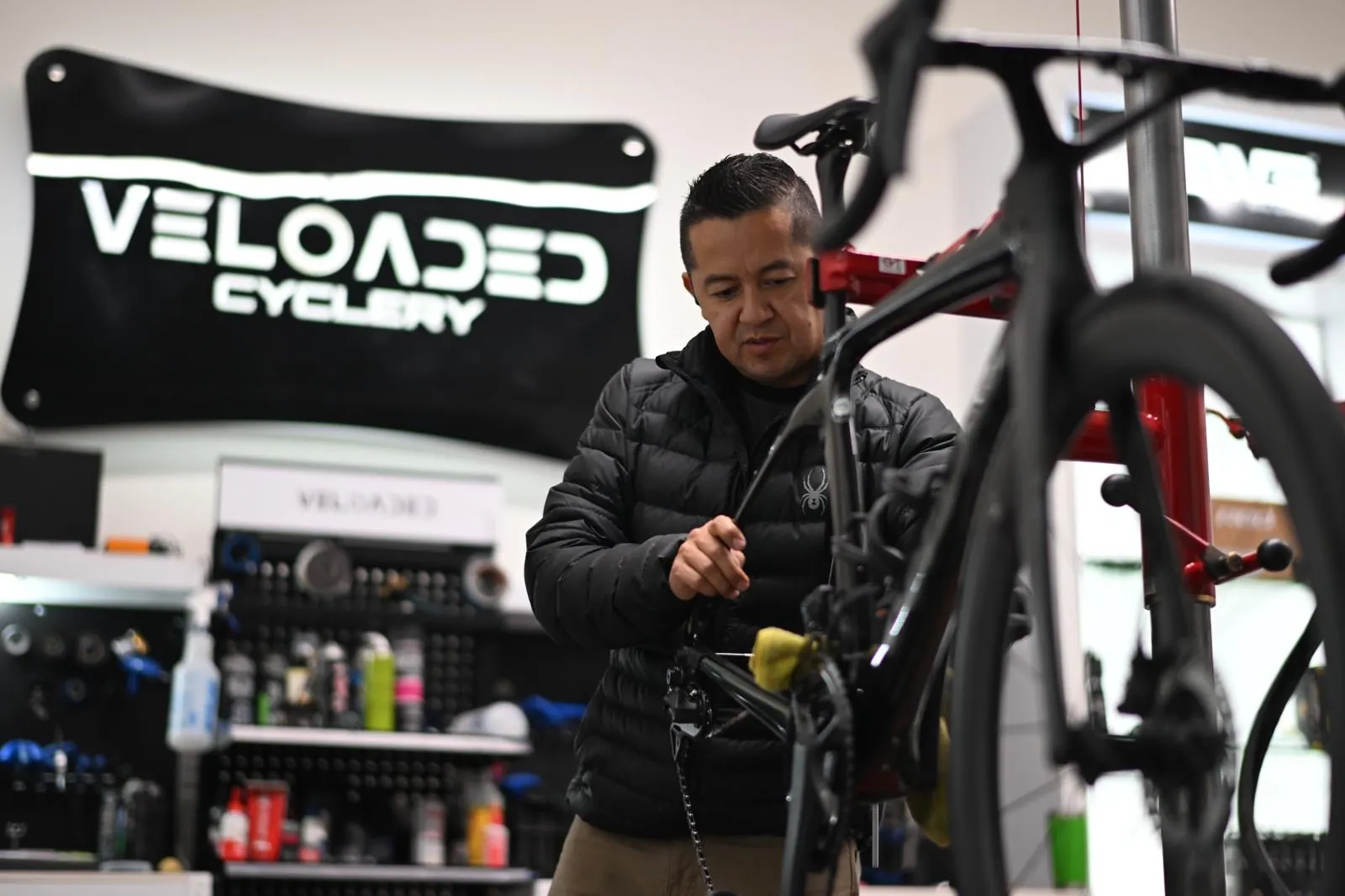
At Veloaded, fits are done by Edgar Rodriguez, our Founder & Master Builder, the same person who builds and services bikes on our bench. The details are on our professional bike fitting in Orange County page; ask about price and scheduling when you book.
What to bring to a bike fit
- Your bike, clean enough to work on, with the tires pumped up.
- Your cycling shoes with the cleats you ride now, even if they're worn. Bring insoles or orthotics if you use them.
- The kit you usually ride in, especially the bib shorts you ride most, since chamois thickness affects saddle height.
- Notes on discomfort: where it hurts, which side, after how long, and on which rides.
- Your goals: an event, a new position, a different bike coming, or just comfort.
- Old fit numbers or photos of your previous setup, if you have them.
Fit or size: which do you need?
If you're buying a new bike, sizing comes first. Frame sizes aren't consistent between brands, so comparing stack and reach against your current bike tells you more than the number on the frame. Our guide on bike fit vs. buying the right size explains the difference. If you already own the bike and it's uncomfortable, a fit is the place to start.
Signs it's time for a fit
- Numb hands or sore wrists on longer rides.
- Knee pain at the front or the side of the knee, or one leg working harder than the other.
- Lower back or neck pain that builds through a ride.
- Saddle soreness that doesn't settle down.
- A new bike, new shoes or a new saddle, or a change of discipline such as moving into triathlon.
Pain that persists is also a reason to see a medical professional. A good fit helps, but it isn't a diagnosis.
After the fit
Changes, even good ones, take a few rides to feel normal. Ride your usual routes, notice what changed, and write down anything that still bothers you. Small follow-up tweaks are common. If you make big changes in training, such as a block of long climbing days in the canyons, check your position again.
Ready to book? Call (714) 760-4908, or book online and choose "Bike fit". Riders across Orange County come to the shop in Santa Ana for a full professional fit with Ed.
Quick answers
What does a professional bike fit include?
A full fit works through saddle height, setback and tilt, reach and drop, bar and lever position, and cleat position, with you pedaling your own bike. On tri bikes it also covers the aero bar and pad position.
What should you bring to a bike fit?
Your bike, your cycling shoes with your current cleats, any insoles or orthotics, the kit you usually ride in, notes on any discomfort, and your goals.
Who does bike fits at Veloaded Cyclery?
Edgar Rodriguez, our Founder & Master Builder, does full professional fits at the shop in Santa Ana. Ask about price and scheduling when you book at (714) 760-4908.
Road and trail conditions change. Check closures before you ride, and ride within your limits.