
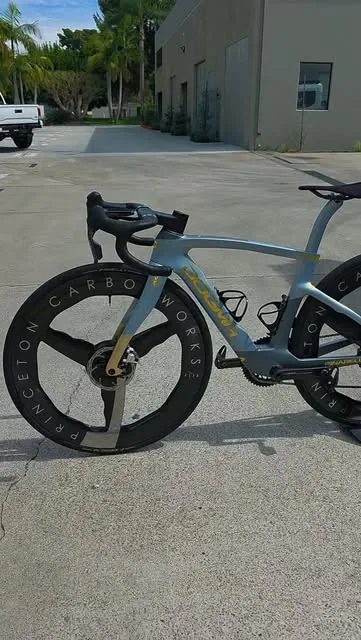
Before you pack: talk to the shop
Always contact the shop first. Arrange the job, get a service ticket or reference number, and ask about return shipping before you send anything. For Veloaded: Call (714) 760-4908 or email veloadedcyclery@gmail.com first to arrange it and get a service ticket, ship to the shop at 3420 W MacArthur Blvd Suite B, Santa Ana, CA 92704, and ask about return shipping details. Our ship your bike page explains how it works at our end.
What you need
- A bike box (a shop's empty box for a new bike is ideal) or a hard or soft travel case.
- Pipe insulation or foam tube, zip ties, packing tape and plenty of cardboard or bubble wrap.
- Plastic axle spacers or old thru-axles to stop the fork and rear triangle being crushed.
- The tools to remove pedals, the bar and the derailleur: usually hex keys and a pedal wrench.
- A marker or tape to mark the saddle height and bar position.
Step by step: a complete road bike
- Photograph the bike from both sides and close up on the cockpit and drivetrain. These photos are your record of its condition and setup.
- Mark the saddle height with tape on the seatpost, then remove the seatpost and saddle together, or lower them.
- Remove the pedals. Remember that the left pedal has a reverse thread.
- Remove the wheels. Put a spacer or an old axle into the fork and rear dropouts, so they can't be squeezed together.
- Protect disc brakes. Put pad spacers between the brake pads, so the pistons can't close if a lever is squeezed. Don't pull the levers while the wheels are out. Many riders remove the rotors and wrap them separately; at the least, keep them away from anything that could bend them.
- Protect the rear derailleur. Unbolt it from the hanger and tape it, wrapped, inside the rear triangle, or make sure it's shielded. A bent hanger is the most common shipping damage.
- Release the bar by loosening the stem faceplate, or turning the bar, and tape it alongside the top tube with padding between. On integrated cockpits with internal hoses, turn rather than remove, and don't strain the hoses.
- Pad every tube with foam insulation, and add padding wherever two parts could touch.
- Pack the wheels beside the frame with cardboard between wheel and frame, and let a little air out of the tires. Keep the cassette and rotors away from the frame.
- Bag small parts (pedals, thru-axles, the seatpost clamp, any bolts) and tape the bag to the box so nothing rattles loose.
- Label it. Put your name, phone and the shop's service ticket number inside the box as well as on the label.
Shipping just a frame or wheels
A frameset is easier. Pad every tube, protect the dropouts with spacers, and keep the headset and seatpost clamp in a bag. For wheels, use a wheel box or a padded wheel bag inside a box, keep the axles from punching through, and pack cassettes and rotors so they can't touch the rims.
Batteries and electronics
Carriers have rules for lithium batteries, and they differ by carrier and service. E-bike batteries usually need special handling. Small groupset batteries are generally less restricted, but check your carrier's current rules before you ship, and tell the shop what's in the box. Turn off and remove any computers, lights and power-meter batteries you can.
Insurance and tracking
Declare the bike's value with the carrier or buy shipping insurance, keep the tracking number, and send it to the shop. Your photos from step 1 help if anything goes wrong.
When it arrives
A good shop checks the box on arrival, matches it to your ticket, and contacts you before starting work. Ask how the bike will be packed for its return trip, and keep your box or case if the shop will reuse it.
What happens when it arrives
Once your bike arrives, it gets the same work as one dropped off: repair and tune-ups, Di2 and AXS service, wheel truing or a custom build from a frame. Riders ship from Los Angeles, San Diego and beyond.
Quick answers
Do I need to contact the shop before shipping my bike?
Yes. Arrange the work and get a service ticket first, so the shop knows what's coming, and ask about return shipping before you send it.
What's the most common shipping damage to a road bike?
A bent rear derailleur hanger. Removing and padding the derailleur, and using axle spacers, prevents most of it.
Can I ship a bike with hydraulic disc brakes?
Yes. Put pad spacers in the calipers, don't squeeze the levers with the wheels out, and protect or remove the rotors.
Can I ship just a frame or a pair of wheels?
Yes. Frames and wheels are easier to pack than a complete bike. Pad every surface and protect the axles and dropouts.
Road and trail conditions change. Check closures before you ride, and ride within your limits.